-
Suite 1/183 Tynte Street
North Adelaide SA 5006 -
Clinic Hours:
Mon – Fri 8:30 am – 5:00 pm

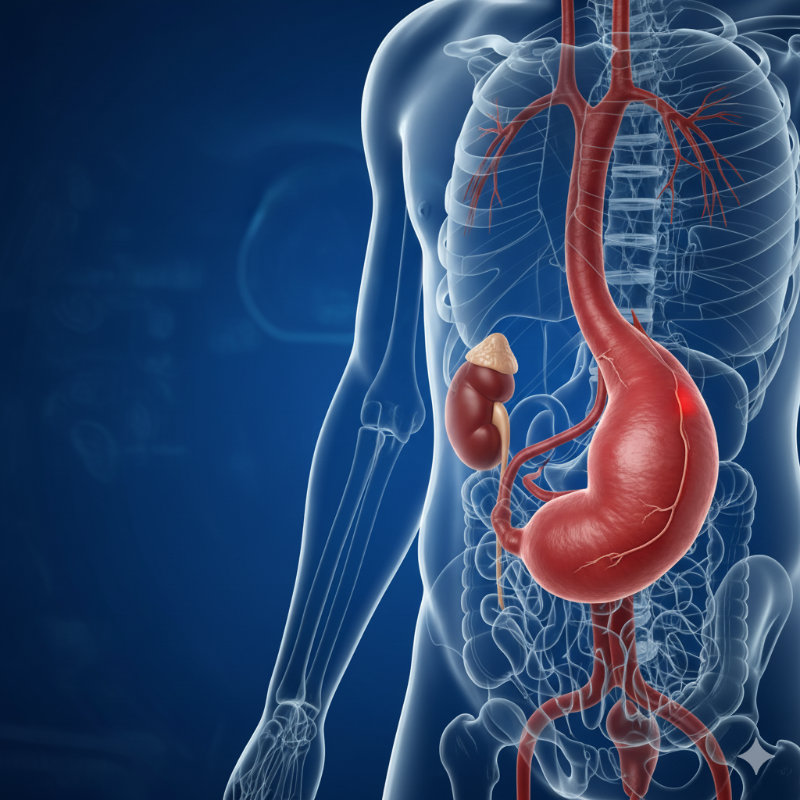
Aortic Aneurysmal Disease
What is an Aortic Aneurysm?
The aorta’s wall is strong and flexible, but over time, it can weaken and bulge outwards. This bulge is an aneurysm. They most commonly occur in two main locations:
Abdominal Aortic Aneurysm (AAA): Occurs in the part of the aorta that passes through your abdomen. This is the most common type.
Thoracic Aortic Aneurysm (TAA): Occurs in the part of the aorta that passes through your chest.
Symptoms of an Aortic Aneurysm
Aortic aneurysms are often called “silent killers” because they frequently develop slowly and cause no noticeable symptoms until they become very large or rupture. Often they are only detected incidentally during testing for other medical conditions.
If symptoms do occur, they can be subtle and depend on the location:
For Abdominal Aortic Aneurysms (AAA):
A pulsating feeling near your belly button.
Deep, constant pain in your abdomen or on the side of your abdomen.
Back pain.
For Thoracic Aortic Aneurysms (TAA):
Pain in the back, neck or chest.
Hoarseness or difficulty speaking.
Coughing or shortness of breath.
Difficulty swallowing.
A ruptured aneurysm is a medical emergency. Symptoms of a rupture are sudden and severe, including:
Sudden, intense, and persistent pain in the abdomen or chest.
Dizziness, light headedness, or fainting.
Rapid pulse.
Cold, clammy skin.
If you are known to have an aortic aneurysm and you experience these symptoms, call Triple Zero (000) immediately.
Causes and Risk Factors
Aneurysms occur when the wall of the aorta weakens. While the exact cause isn’t always clear, atherosclerosis (hardening of the arteries due to plaque build-up) is a major contributor.
Key risk factors include:
Age: Most common in people over 60, especially for AAAs.
Smoking: Significantly weakens artery walls.
Male Sex: Men are much more likely to develop an AAA.
High Blood Pressure (Hypertension): Puts constant stress on the aorta.
High Cholesterol: Contributes to atherosclerosis.
Family History: Any first-degree relative with aneurysms increases risk.
Other conditions: Certain genetic disorders (e.g., Marfan syndrome), chronic inflammatory conditions, or previous injury/infection can also increase risk.
Diagnosis and Treatment
Because aneurysms often have no symptoms, they are frequently discovered incidentally during tests for other conditions. If suspected, diagnosis typically involves:
Physical Exam: Your doctor might feel for a pulsating mass in your abdomen.
Ultrasound: A common and non-invasive test to detect and monitor AAAs.
CT Scan (Computed Tomography): Provides detailed images of the aorta and is excellent for precisely measuring aneurysms.
MRI (Magnetic Resonance Imaging): Another imaging option in selected patients.
Treatment aims to prevent rupture and manage symptoms:
Monitoring (Surveillance or Watchful Waiting)
If an aneurysm is small and not growing rapidly, your doctor may recommend regular monitoring with scans to check its size and growth.
Lifestyle Changes & Medications
Quit smoking (critical to slow aneurysm growth).
Manage blood pressure and cholesterol with diet, exercise, and medication as prescribed.
Regular exercise and a healthy diet.
Procedures & Surgery
When an aneurysm is large, growing quickly, or causing symptoms, intervention is usually recommended:
Open Surgical Repair: Involves making an incision, removing the weakened section of the aorta, and replacing it with a synthetic graft. This is a major surgery.
Endovascular Aneurysm Repair (EVAR or TEVAR for thoracic): A less invasive procedure where a stent-graft (a fabric tube supported by a metal mesh frame) is inserted through small incisions in the groin and guided into the aorta to line the aneurysm, preventing it from rupturing.
Preventing Aortic Aneurysms
While some risk factors are genetic, you can significantly reduce your risk of developing or worsening an aneurysm by:
Never smoking or quitting if you do.
Maintaining healthy blood pressure and cholesterol levels.
Eating a heart-healthy diet.
Exercising regularly.
Maintaining a healthy weight.
Having regular medical check-ups, especially if you have risk factors.
Discussing screening options with your GP if you are a male over 65 with a family history of AAA.
If you have risk factors for an aortic aneurysm or any concerns, please discuss them with your GP. Early detection can save lives.